


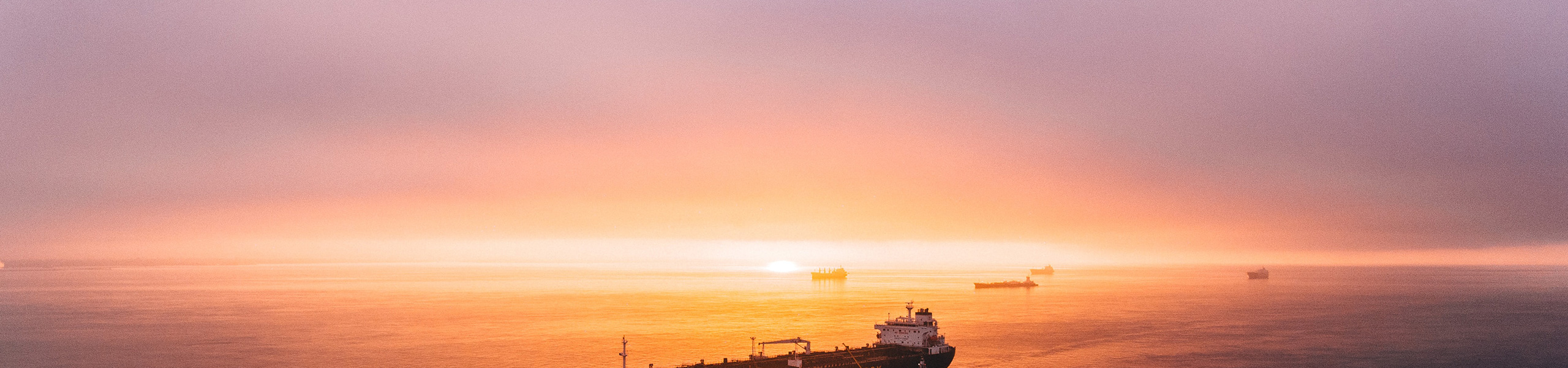
Travel Report, Jan. 25 – Feb. 3, 2026
BHV – HH – NOK – Klaipeda – Riga – NOK – BHV
General: First of all, many thanks to Pfeiffer Agency for the detailed preparations and briefing documents, and to Ms. Pfeiffer and Ms. Weber for fine-tuning the trip. It’s very helpful to know exactly what to expect, what to pack, and, of course, what to look forward to.
Day 1: Boarding in Bremerhaven
Thanks to the excellent directions from Pfeiffer Agency and Google Maps, it’s no problem finding the entrance to the cargo terminal in Bremerhaven and the parking lot for my personal car; the free parking for the duration of the trip is no issue at all. Friendly terminal staff direct you to the waiting area for the shuttle. At the ship—which is already impressively large, even though there are much larger ships moored ahead of it—I’m warmly welcomed by the “heavy gang,” the Filipinos, who immediately take my suitcase and carry it up the very steep gangway to the officer on duty, the second officer. As mentioned in the travel documents, he’s very busy with port operations and asks me to come back later. The friendly crew member from earlier carries my suitcase up the steep stairs to the 4th deck to my cabin, which I then immediately claim as my own—thank you so, so much!
The cabin of the 3rd officer—which is no longer occupied—is very spacious, very functional, and mostly clean, though in some places a bit “worn out.” I’m especially happy about the large windows facing forward and to port—after all, I want to be able to see something, including the horizon, in case things get rough. What I’m missing at this point—since it’s mentioned in the description on the website—is a TV and DVD player, especially since I took extra care when selecting my DVDs while packing.
After the initial loading operations—which I can observe very well through my windows—and after studying the laminated English and German instruction manuals in my cabin, which are largely identical, I head down at 5:00 p.m. for dinner, which, like breakfast and lunch, is hot and very hearty. The cook is an exceptionally friendly and cheerful Filipino who likes to sing soul, blues, or swing to himself in the kitchen.
The officers, who are almost exclusively Ukrainian, greet me formally but still seem a bit reserved.
I end up having more in-depth conversations with some of them during the trip; my basic Russian helps break the ice now and then, especially since the officers’ English skills vary quite a bit—the cook is far ahead of the rest in that regard. The officers also communicate exclusively in Russian among themselves. The one or two passengers, if any, sit with the crew; at my table are two Ukrainian cadets, and the last seat is still open for my Swiss fellow passenger, who is scheduled to board in Hamburg.
After dinner, I start by taking a tour of the outdoor areas, as far as they’re accessible to me without further arrangements. The wheelhouse is essentially a 7-story metal high-rise, 25 meters wide and about 7–8 meters deep lengthwise. The lowest level is the so-called “poop deck,” the aft deck, where you’re generally not supposed to be during mooring maneuvers or while the ship is in port—mainly because of the taut ropes and to avoid hindering ongoing work. On the poop deck and the first deck above it, you can access the port and starboard railings in the outdoor area behind the wheelhouse. Further up, this is only possible on the bridge deck (Deck 6), past the funnel. You can go up either via the exterior staircase on the port side or via the interior staircase in the wheelhouse. Each deck has a door leading to the exterior staircase, but in port these are usually locked from the inside for safety reasons. In front of the wheelhouse, you shouldn’t move around at all while in port due to ongoing loading operations; while underway, the deck is freely accessible all the way to the bow, though you must sign out on the bridge before going there and sign back in upon your return. After all, there’s over 170 meters between the bow and the stern—it takes a while to walk that distance.
After unpacking and putting my things away, I watch the loading operations through my front window and take a look at the signs with the signals and guidelines for emergencies hanging on the walls; everything from fire on board to pirate attacks is covered. In the cabin, besides the helmet and signal vest, there’s also a life jacket and a survival suit, which I end up unpacking to review the basic steps for putting them on and to make sure I didn’t end up with a child’s size.
Day 2: Trip to Hamburg
We set sail at 5:12 a.m.; the Weser and the North Sea are relatively calm, though visibility is quite poor. At 10:00 a.m., we pass Cuxhaven and enter the Elbe estuary, initially bypassing the entrance to the Kiel Canal in Brunsbüttel, and then proceeding via Blankenese and Finkenwerder to the Eurogate Container Terminal in Hamburg-Waltershof (EGH), where the very large container ships are docked.
During the voyage, I keep the second officer and later the first officer company on the bridge or walk around outside on the bridge deck; only during the docking maneuver in Hamburg does the captain want to be left alone on the bridge, though being outside on the bridge deck is not a problem.
The view, both from the bridge and from my cabin, is almost perfect, since a large number of containers were unloaded in Bremerhaven. Hopefully, my bow window will remain unobstructed even after the loading operations at the four (!) Hamburg container ports. At 3:30 p.m., we’re moored at Waltershof, and the unloading and loading operations begin. On average, the cycle for one container takes about 1½ minutes. It’s really impressive how precisely the crane operators grab and move the containers with the large grab.
Day 3: Loading Operations in Hamburg
Around midnight, we move to the Burchardkai Container Terminal. I don’t really wake up yet. However, around 1:30 a.m., the first containers from the front row directly in front of the wheelhouse are unloaded. This means that each time, the crane operator has to thread the container grab—which is unloaded but weighs about 5 metric tons—into the respective four guide rails above the containers and lower it onto the container. Since two of these four rails are connected to the bow of the wheelhouse, you not only hear it very clearly, but you can also feel the jolts quite distinctly in your bunk. It feels just like being in the cab of a truck during loading and unloading. So, I’ll just have to watch until this row is finished and things quiet down enough to get some sleep. I forgot to mention that the terminal and the ship itself are, of course, lit up as bright as day, and the windows have no shutters, only moderately light-blocking curtains.
At six in the morning, we head to the third container port, the Tollerort Terminal. Due to bad weather and unfavorable traffic conditions, I decide to stay on board today to watch the loading operations, and shortly after noon, we’re moved again—this time to the Altenwerder Container Terminal. In Altenwerder, the container handlers are fully automated; even stacking the containers on the container towers is done without a crane operator—only the loading bridge at the ship still has a human operator. Here, one of the heavy cargo hatches is lifted for the first time to load and unload containers in the hold below.
In Altenwerder, my travel companion—a Swiss retiree from the southeastern shore of Lake Constance—also comes on board. We’d already been in touch via WhatsApp and phone to coordinate our arrival times. He’s also a recreational boater—though he sails—with experience not only on Lake Constance but also in the Baltic Sea, so we certainly won’t run out of things to talk about along the way.
Day 4: Here We Go—Down the Elbe and Through the Kiel Canal into the Baltic Sea
We set sail before breakfast, passing the Airbus plant in Finkenwerder with its large runway, and—amid noticeably cooler temperatures—pass through the Brunsbüttel Lock into the Kiel Canal (NOK).
Before entering the NOK, we spot a processing vessel at the new LNG terminal. My brother, who’s watching us enter the NOK via webcam, sends me the footage taken as we enter the Brunsbüttel lock, but then I quickly head back inside the ship because the wind, humidity, and temperature are making for unpleasant conditions. The floating docks for recreational boats don’t look inviting at all today.
In the NOK today, we can take a leisurely stroll under the containers to the bow, 170 meters away—of course, only after checking out with the captain and wearing a high-visibility vest.
Since we’re not fully loaded, the upper part of the stem is still visible above the water—just be careful not to drop your cell phone into the water through the porthole while taking a photo. After that, we spend a few more hours on the bridge; it’s interesting to hear what the pilot (who disembarks in the middle of the canal and is replaced by another) and the two local canal helmsmen (who steer our ship through the entire canal in shifts) have to say. Our officers are also a bit more relaxed right now, since the pilot and local helmsmen have taken over.
As we continue our journey, I read through all the instructions posted on the wall regarding procedures for fire, collision, man overboard, abandoning ship, etc. Even as a passenger, there are specific rules, instructions, and dress codes to follow. Around 10:00 p.m., we pass through the eastern lock near Kiel and sail through the Kiel Fjord out into the Baltic Sea.
Day 5: A Day at Sea—and What My Sense of Balance Thinks of It . . .
Even before getting out of bed, the difference from a cruise ship or a passenger ferry becomes clear. The ship has no active stabilization systems whatsoever, such as adjustable fins or responsive ballast pumps. Although the sea is moderately choppy, the ship still rolls quite vigorously around its longitudinal axis at times—something you definitely notice on my 4th deck, more than 20 meters above the waterline. Added to this are unexpected jolts when the bow enters the troughs of the waves.
Both of these factors make showering and getting dressed a bit more exciting this morning. I’m also glad that from my cabin I can look forward toward the horizon.
The walk to the dining room and having breakfast without a view outside takes some getting used to today, so I head back upstairs quickly. From the bridge, we see the snow-covered northern tip of Bornholm and heavy ship traffic on the Baltic Sea. Outside, however, it’s extremely unpleasant, and the deck is slippery in places.
Day 6: Arrival in Klaipeda, city tour, and departure for Riga
Shortly after 4:00 a.m., we arrived in Klaipeda, Lithuania’s largest port city. At this hour, temperatures are around -20°C, with a high of -15°C expected later in the day. My fellow passenger and I check out of the ship after breakfast; the scheduled departure time is 2:30 p.m., but the first officer—or “chief mate,” as he’s called here on board—points out, however, that two loading ramps might be used, in which case loading would be completed as early as 12:00 p.m. and departure would follow shortly thereafter—regardless, of course, of whether we’re back yet. We promise to stay in touch by phone but don’t want to miss out on a quick trip into the city center.
It’s about a 1-kilometer walk to the exit of the container terminal, but the road is so icy that I instinctively drop into a push-up. Photography is strictly prohibited here. At the gate, we’re kindly helped on our way after showing our passports and the current crew list prepared by the chief mate. We manage to arrange a taxi and, 30 minutes later, arrive in the city center in beautiful weather—though there’s hardly anyone on the streets.
After spending some time exploring the old town, we realize that my warm clothes from my time in Russia actually keep me warmer than Daniel’s clothes from Lake Constance, so we decide to grab a coffee indoors. A call to the Judith confirms that departure at 12:30 p.m. might still be possible, so we head back with the same taxi driver from this morning.
We finally set sail at 2:30 p.m. through the icy bay off Klaipeda with a beautiful view of the Curonian Spit. I watch it all from right at the bow. Since you can’t hear the engine up front, we glide virtually silently into the sunset—you only hear the ice now and then. A wonderful experience. So it doesn’t bother me too much that my right hand almost freezes every time I take a photo with my cell phone.
There’s no trace left of yesterday’s mild seasickness; I’m enjoying the night voyage toward Riga.
Day 7: Arrival and Sightseeing in Riga
We arrive in Riga around 10:00 a.m. We actually wanted to disembark quickly to see the city, but that plan is thwarted by a visit from a friendly customs couple, who also bring along a curious drug-sniffing dog. Of course, the customs officer and her dog are primarily interested in the passengers’ cabins; by the time our papers are cleared, it’s noon, and we treat ourselves to another meal prepared by Miquel in the dining room.
Getting into the city turns out to be a bit of a challenge, since after a roughly 30-minute walk through the icy terminal, we make it past the security checkpoint, but the taxi driver we ordered online simply can’t find his way to our location. With temperatures around -25°, even short phone calls without gloves are becoming increasingly difficult. I almost fail to show a screenshot of our location with my stiff fingers. After a security guard who happened to show up tells us we still have to pass through another checkpoint just under 1 km away, we finally find our friendly taxi driver. However, this outer checkpoint closes today—Sunday—at 8:00 p.m., so we have to be back by then. Riga, however, turns out to be a wonderful, impressive city, and we all agree to come back someday—perhaps when it’s a little warmer.
With our friendly taxi driver, whom we reach again by phone, we make it to the terminal’s checkpoint just in time before 8:00 p.m. The ship, of course, is being loaded all night long.
Day 8: Safety Briefing and Back to the Baltic Sea
The briefing on the lifeboats was actually scheduled for yesterday, but the friendly second officer had postponed it to today to accommodate our city tour. My fellow passenger and I learn how to get into the free-fall lifeboat, how to operate it (not much different from our recreational boats), and how best to survive the free fall. There’s no set seating arrangement, and everyone should be able to operate all the controls.
Even during the briefing, it’s freezing cold, and we agree that we want to avoid having to abandon ship under these conditions at all costs. But if it comes to that, we’d rather be in the enclosed free-fall lifeboat than in the open lifeboat.
After casting off, there’s a problem with the main engine; after circling the harbor—with the energetic assistance of tugboats to break through the ice—we dock again for the time being.
Just to be on the safe side, I check the Baltic Air flight schedule from Riga (probably a bad habit from my professional life), but a few hours later we set sail again and begin another mystical journey across the frozen Baltic Sea under a full moon.
Day 9: A Day at Sea with a Visit to the Engine Room
The ship is rolling quite a bit today as well, probably more due to the gusts of the strong east wind than the swell, but we’ve gotten used to it much faster than on the outward journey. The chief engineer had promised to show us the engine room.
This was actually supposed to happen while in port; communication is much more difficult when the main engine is running, even though his English is somewhat better than my poor Russian. The engine room is in tip-top shape and very well maintained—kudos!
The many additional systems are impressive, such as the seawater desalination system for service water, the wastewater treatment plant, the heating systems for cabins and containers, and much more. The chief engineer also serves as something of a caretaker on board. With a cell phone GPS and the nautical chart we brought along, it’s easy to track our course even from the cabin.
Day 10: A long day from the Baltic Sea to Hude
Before breakfast, we pass Kiel-Holtenau at 6:00 a.m., and by sunrise we’re already well into the NOK. With the strong easterly wind last night, we maintained a speed of 18 knots or more almost the entire time. In the NOK, there’s once again a wide variety of ships on the water. We wonder what the Italian Ro-Ro freighter might be carrying—perhaps wind turbine components?
The rest of the itinerary is getting increasingly exciting, as we’re scheduled to arrive in BHV at 10:00 p.m., and—as reported by Katwarn—freezing rain later that night and the following morning is expected to make the return trip from Bremerhaven to Hude somewhat difficult.
Passing through the locks at Brunsbüttel feels very quick today; the difference in elevation—and thus the duration of the lock passage—depends on the current tide in the Elbe, while the water level in the NOK remains relatively constant.
And just like that, we’re sailing on the Elbe toward Cuxhaven and the North Sea. To reach the Weser, we have to take a wide detour almost all the way to Heligoland, since our 9.50 m draft prevents us from taking a shortcut through the mudflats.
Along the way, we pass the entrance to the Hadelner Canal, which we’ve used four times ourselves with our “Katharina” as a connection to the Weser—access is only possible at high tide.
Unfortunately, our arrival in BHV has now been delayed due to headwinds and a head current in the Weser; we won’t dock until around 10:30 p.m. The freezing rain is expected to reach Hude from the south around midnight—it’s going to be exciting.
After docking, it takes a while for the customs officers to arrive so I can re-enter the EU. However, they’re aware of the slippery road warnings and, when I ask, wave me through immediately—I can go ashore (thanks again!). Here I meet a friendly cargo manager from Oldenburg; he immediately calls a priority shuttle via radio so I can get from the Eurogate Terminal to the parking lot quickly—the logistics here are a bit different than in Klaipeda and Riga.
Still, I have a few minutes left to say goodbye to the ship—it’s been a great ten days filled with so many new experiences. I can definitely see myself taking a similar trip again, maybe even when the temperatures are a bit more pleasant.
You can tell the car has been waiting for me outside for ten days in sub-zero temperatures. Shortly before midnight, I set off, step on the gas, and arrive in Hude at 1:00 a.m.; fifteen minutes later, the freezing rain begins.